New Research: Microplastics Are Crossing Into the Human Brain — and the Findings on Memory Are Hard to Ignore
Scientists expected the brain's natural barrier to keep the particles out. Instead they found a spoon's worth wired into the average brain — and far more in the brains of people who'd developed dementia. Here's what's now known, and what health-conscious people are doing about it.

When researchers first set out to measure how much microplastic ends up in the human body, they weren't expecting what they found in the brain. The brain is guarded by the blood-brain barrier — a filter so selective most medications can't get through it. The assumption was simple: whatever plastic we eat and breathe, the brain stays clean.
It doesn't.
A 2025 study published in Nature Medicine measured the plastic content of human brain tissue directly. The average brain, the researchers reported, now carries roughly a spoon's worth of microplastic — about 7 grams — lodged in the organ you think, remember, and feel with. And the levels are climbing fast: brain concentrations were about 50% higher in 2024 than in samples from just 2016.
The barrier that was supposed to protect us
The most unsettling part isn't the amount — it's the location. Animal research has shown that microplastic particles small enough to slip past the blood-brain barrier do exactly that, accumulating in brain tissue after only weeks of exposure through ordinary drinking water. In those studies, the exposed animals went on to show measurable changes in behavior and memory.
"The blood-brain barrier is supposed to be very difficult to permeate. Yet these particles were able to get there." — Paraphrasing findings from published neuroscience research on microplastic exposure
The dementia signal nobody can un-see
Then came the finding that turned a curiosity into a concern. In the same body of research, brains from people who had been diagnosed with dementia contained several times more microplastic than brains without it.
Researchers are careful — and correct — to say this is an association, not proof of cause. More plastic in dementia brains does not, by itself, mean plastic causes dementia. But for a lot of people, "we haven't proven it yet" is not the same as "go ahead and keep accumulating it." As one way of putting it goes: health-conscious people aren't volunteering to be the control group.
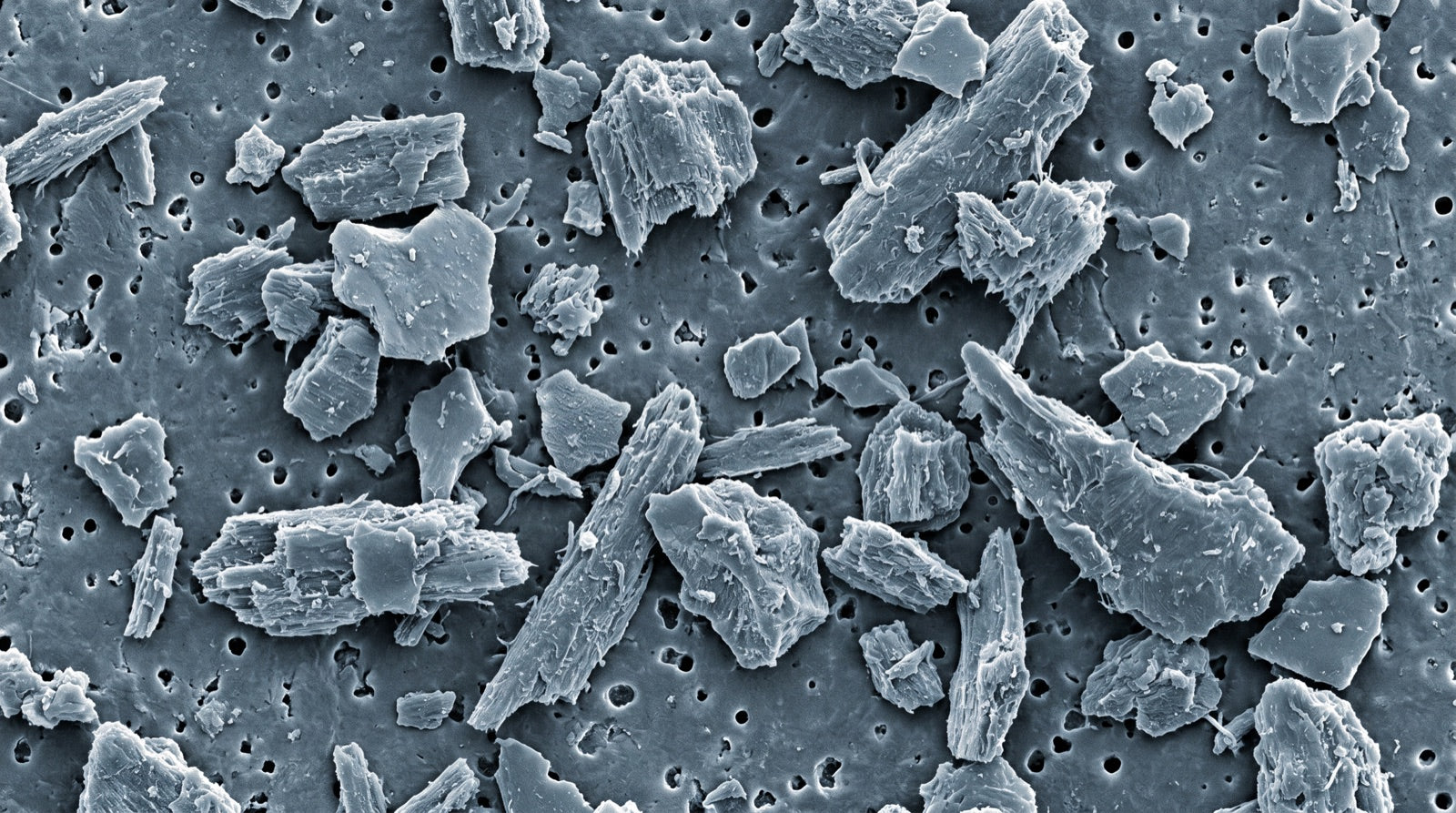
"So is there anything I can actually do?"
This is the question that follows the headlines, and for years the honest answer was discouraging. You can drink from glass, filter your water, swap the plastic cutting board — and you should. But avoidance only slows what comes in. It does nothing about what's already inside you, or the fresh load arriving every single day in food, water, and household air (an estimated credit card's worth of plastic per week).
The shift came when researchers stopped asking only "how do we avoid it?" and started asking "how do we help the body clear it?" — and the answer turned out to begin in an unglamorous place: the gut.
Why the gut is the place you can actually fight back
Most microplastic enters through what you eat and drink, which means the digestive tract is the first place particles pass through — and the last place you can intercept them before they cross into the bloodstream and travel to organs like the brain. Catch them there, escort them out, and they never get on the highway.
That's the principle behind a class of natural binders — and one in particular has the human data to back it up.
The binder with a positive charge
Chitosan, a fiber derived from shellfish, carries a positive electrical charge. Microplastic particles carry a negative one. In the gut, chitosan latches onto the particles and carries them out through normal digestion — before they're absorbed.
In a published human crossover study, a single dose of chitosan increased microplastic particles excreted in stool by about 45% after a standardized meal. In a 2026 pilot human study, daily chitosan was associated with a 26.3% drop in measured blood microplastic concentration in 15 days, while the placebo group didn't budge.*
The 3-step method behind Microplastic Detox
The supplement built around this research, Microplastic Detox, combines the binder with a barrier — a simple daily protocol its makers call the Binder-Barrier Method:
Microplastic Detox — Daily Brain & Body Support
The clearance side of the microplastic equation. Two capsules a day, with a meal. Backed by a 60-day money-back guarantee.
Get Microplastic Detox →What people are saying
[ Placeholder — replace with a real, verified customer review before scaling this page in paid traffic. ]
[ Placeholder — replace with a real, verified customer review. ]
[ Placeholder — replace with a real, verified customer review. ]
Why people choose it over the alternatives
- ✓A studied binder, not a vague "detox." Human blood data (−26.3% in 15 days), human stool data (+45% excretion), plus preclinical research — on the core ingredient.*
- ✓Built for daily use. Unlike activated charcoal, which binds your nutrients and medications and isn't meant for daily use, this fiber matrix is formulated for every day.*
- ✓Works at the point of entry. The gut is where exposure begins and where particles can still be intercepted.*
- ✓Clean and tested. Five working ingredients, no filler junk. Made in the USA in cGMP facilities, third-party tested for purity, potency, and heavy metals.

Every week you wait is another credit card's worth of plastic
The exposure is constant. The science on clearance support is here. The fix takes ten seconds a day.
Start My Microplastic Detox →Frequently asked questions
Does it really remove microplastics?
The core ingredient, chitosan, is the most-studied natural binder for microplastics. Published human research shows increased particle excretion in stool (+45%) and lower measured blood microplastic levels (−26.3% in 15 days). These describe studies of the ingredient, not guaranteed outcomes of the finished product.*
How do I take it?
Two capsules once a day, with a meal. Some people start with one capsule for the first few days. Exposure is daily, so support is meant to be daily too.
Is it safe to take with medications?
Ingredients are GRAS-status and third-party tested. As with any fiber/binder, if you take prescription medications, take them at least a couple of hours apart and consult your doctor. This product does not diagnose, treat, cure, or prevent any disease.
Who should NOT take it?
It contains shellfish (crab, shrimp) and is not for people with shellfish allergies. Not for use by anyone pregnant, breastfeeding, or under 18.
What's the guarantee?
60-day money-back guarantee. If it isn't for you, contact support for a refund. Free shipping on orders.