 4.5x
4.5x
Arterial plaque
People with microplastics detected in their carotid artery plaque had about 4.5x the risk of heart attack, stroke, or death over the following ~34 months.
NEJM 2024 ↗
Microplastic Detox (PDP v2 Preview)
Daily support for microplastic exposure


Microplastics have been detected in the air we breathe, the water we drink, and the food we eat. Avoidance alone is no longer a realistic strategy — the threat is everywhere, and it's unavoidable.
Synthetic fibers shed from clothing, carpet, and furniture stay suspended in the air of nearly every indoor space you spend time in.
Plastic particles have been found in municipal tap water — and at even higher concentrations in bottled water.
Packaging, processing, and the food chain itself deliver plastic particles to the plate — salt, seafood, and produce included.
Researchers keep finding plastic particles where they were never meant to be — and the published associations are hard to ignore. This is what the peer-reviewed literature reports about microplastics in human tissue.
4.5xPeople with microplastics detected in their carotid artery plaque had about 4.5x the risk of heart attack, stroke, or death over the following ~34 months.
NEJM 2024 ↗ Up to ~10x
Brain samples carried markedly more microplastic than liver or kidney, and decedents with a dementia diagnosis showed substantially higher concentrations.
Nature Medicine 2025 ↗ Detected
Microplastics have been measured in human placental tissue, raising questions about early-life exposure.
Environment International 2021 ↗ Detected
Microplastic particles were found in the majority of human breast-milk samples analyzed in a published study.
Polymers 2022 ↗ Detected
Microplastics have been detected in human semen samples, an emerging area of reproductive-health research.
Sci. Total Environ. 2024 ↗ Detected
Microplastic fibers were identified deep in human lung tissue, including the lower regions of the lung.
Sci. Total Environ. 2022 ↗ Inflammation
Laboratory research reports that microplastic exposure can trigger inflammatory signaling and oxidative stress in human cells.
J. Hazardous Materials 2022 ↗These are findings about microplastics in the general scientific literature. They describe associations observed in published research, not causation, and not results from using this product. Microplastic Detox is a dietary supplement and is not intended to diagnose, treat, cure, or prevent any disease. These statements have not been evaluated by the Food and Drug Administration.
The plastics touch your food, your water, and the air you breathe — every single day. Here's where the research keeps finding them.
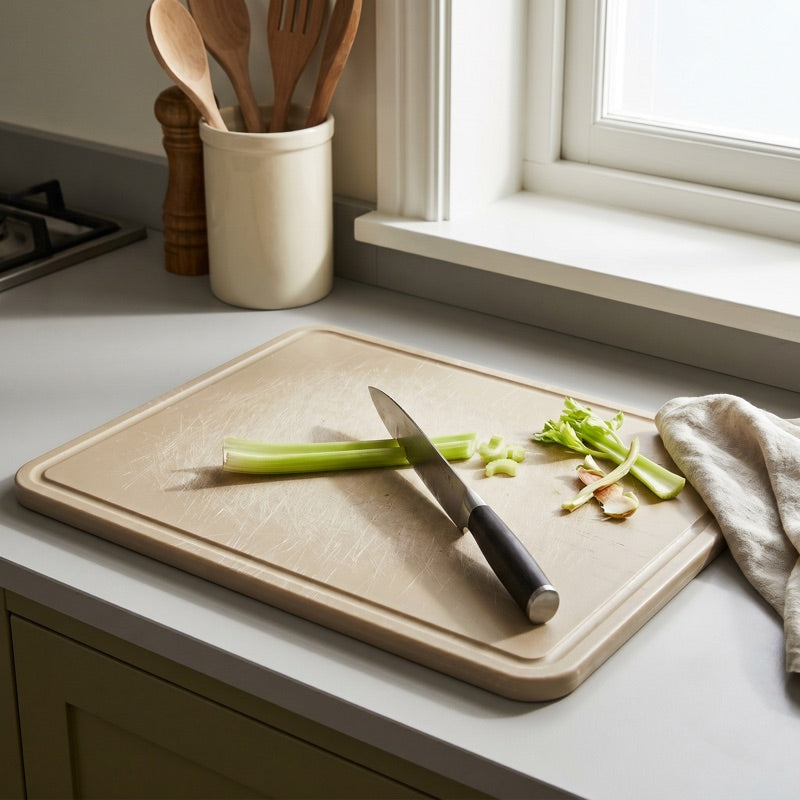
Chopping on a plastic board can shed tens of thousands of microplastic particles into your food over a year of normal use.
Kitchen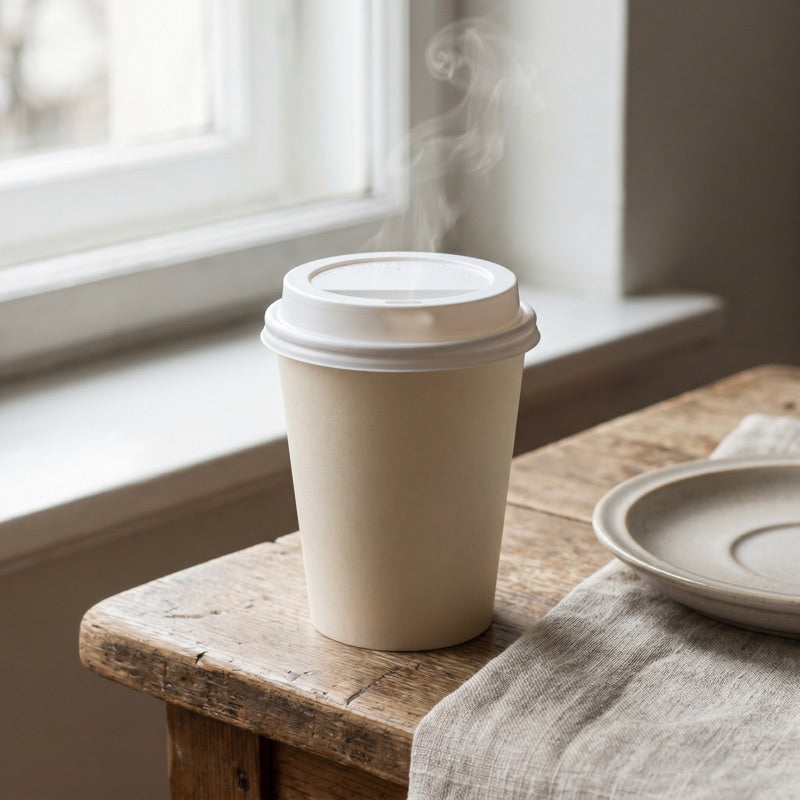
Hot liquid in plastic-lined cups has been shown to release microplastic particles directly into the drink.
Daily habit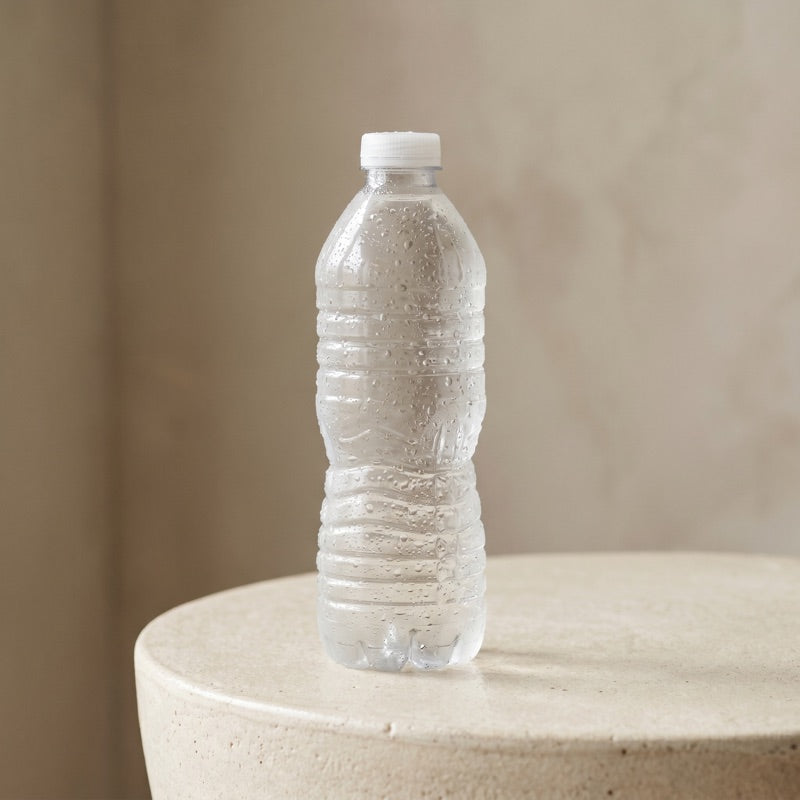
Bottled water can contain hundreds of thousands of nano- and microplastic particles per liter.
Hydration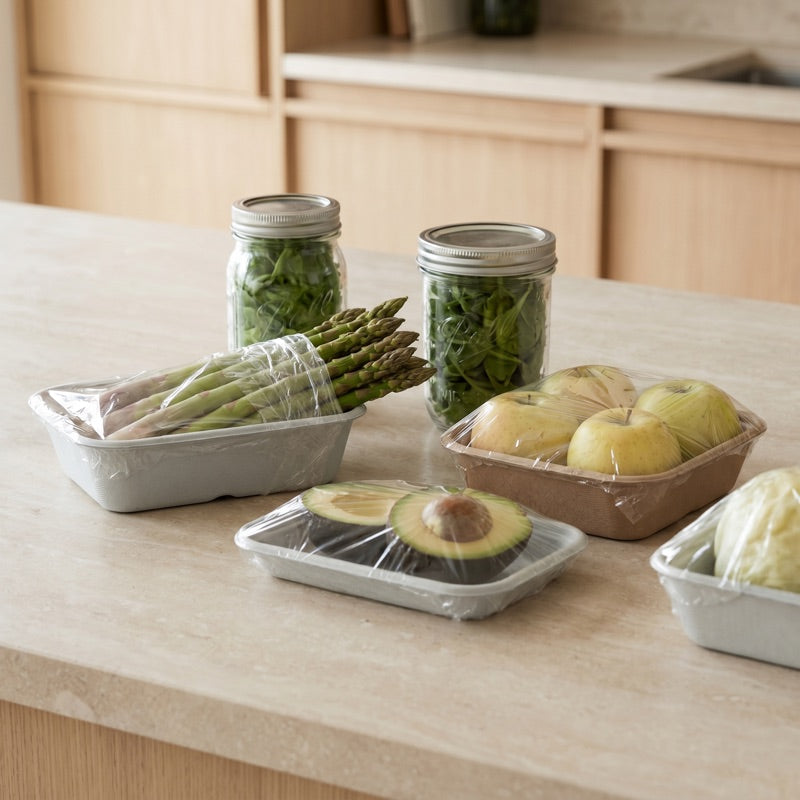
Wrapping, containers, and cling film transfer microplastics into the foods they hold — especially when heated.
GroceriesSources reflect findings reported in peer-reviewed microplastics research about everyday exposure routes. Individual exposure varies.
Once swallowed, microplastics don't just pass straight through. Research shows some particles can cross the intestinal lining and enter the bloodstream. Microplastic Detox works in three stages: bind the particles, buffer the gut around them, and protect the barrier they would otherwise cross.*
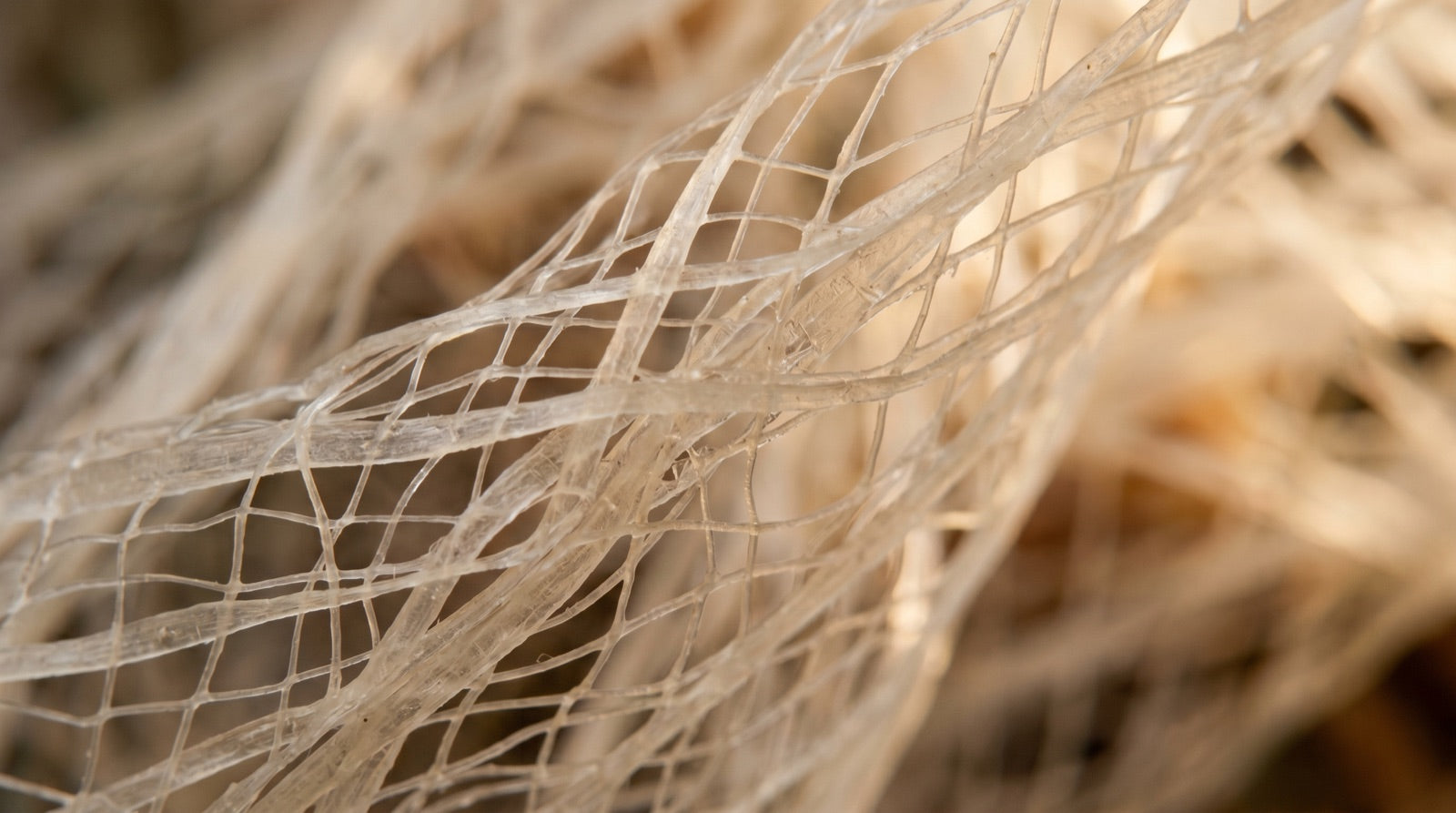
Chitosan's positive surface charge attracts negatively charged microplastic particles in the gut, holding them within the fiber matrix during digestion so they're carried toward elimination instead of lingering.*
Active: ChitosanPrebiotic fibers — baobab and apple pectin — form a gentle fiber matrix that supports a healthy microbiome and steady transit, helping bound particles keep moving through the gut toward natural elimination.*
Active: Baobab + Apple pectinMicroplastics don't only pass through — some particles can slip between the cells of the gut wall and cross into the bloodstream. Slippery elm's soothing mucilage coats and supports the intestinal lining — the barrier those particles must cross — to support the gut's natural defenses during daily use.*
Active: Slippery elmBind. Buffer. Protect. Three stages, one daily serving — built around clinically studied chitosan.
See the full mechanism →*These statements have not been evaluated by the Food and Drug Administration. This product is not intended to diagnose, treat, cure, or prevent any disease.
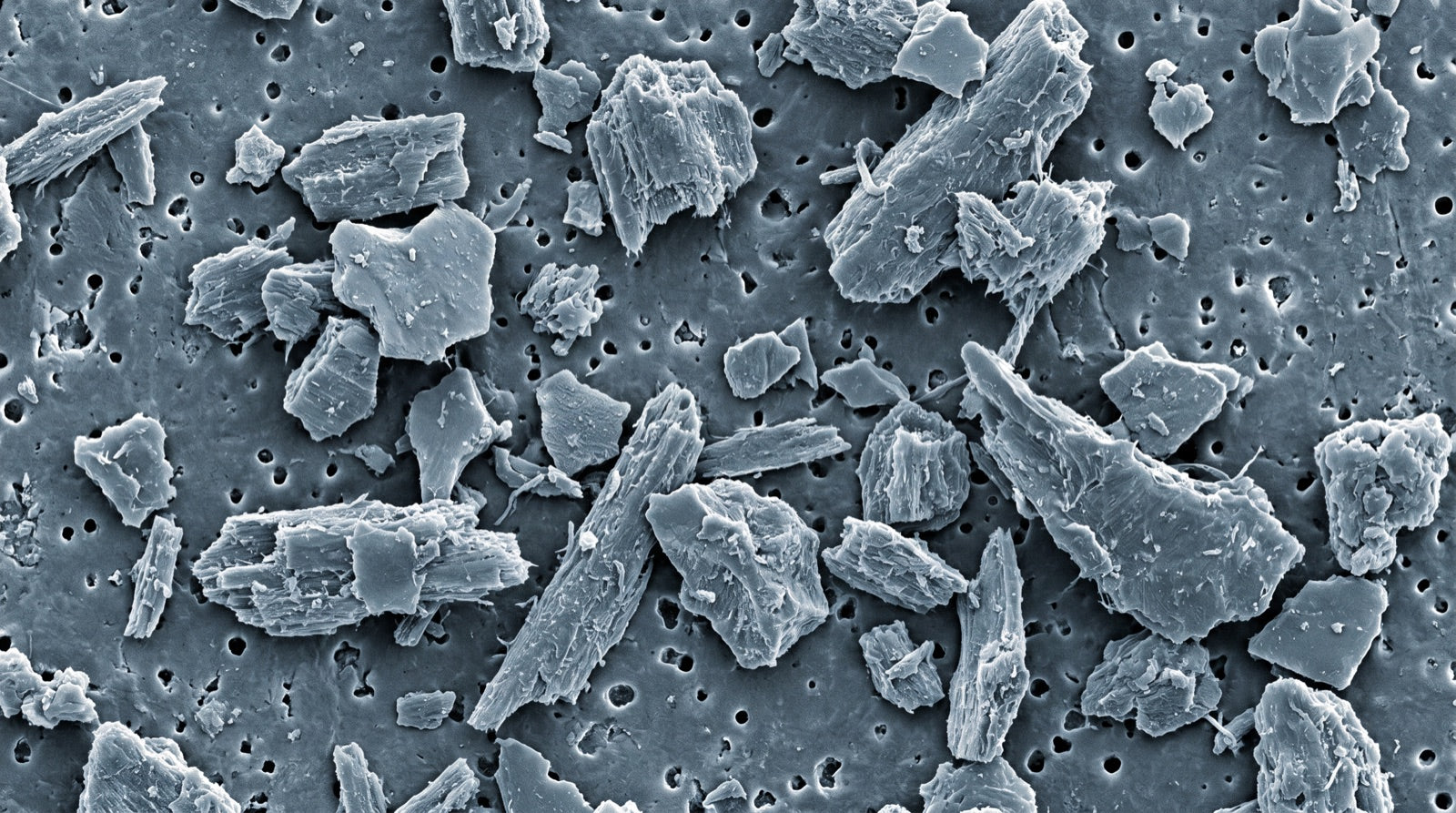
In a 2026 human study, daily chitosan supplementation was associated with a 26.3% decrease in measured blood microplastic concentration after 15 days, while the placebo group showed no significant change.
In a 2025 human crossover study, chitosan was associated with over 45% more microplastic particles measured in stool versus baseline after a standardized meal — direct evidence of increased fecal elimination.
In animal models, chitosan was associated with increased elimination of ingested microplastic particles from the gastrointestinal tract.
Chitosan is a positively charged dietary fiber that can interact with negatively charged microplastic particles during digestion, supporting their movement through normal digestive elimination.
*These statements have not been evaluated by the Food and Drug Administration. This product is not intended to diagnose, treat, cure, or prevent any disease. Findings reflect studies of the individual ingredient, not the finished Microplastic Detox formula.
Chitosan is a positively charged fiber. In published research, it interacts with negatively charged particles and pulls them together into a fiber matrix — the difference you can picture under the microscope.
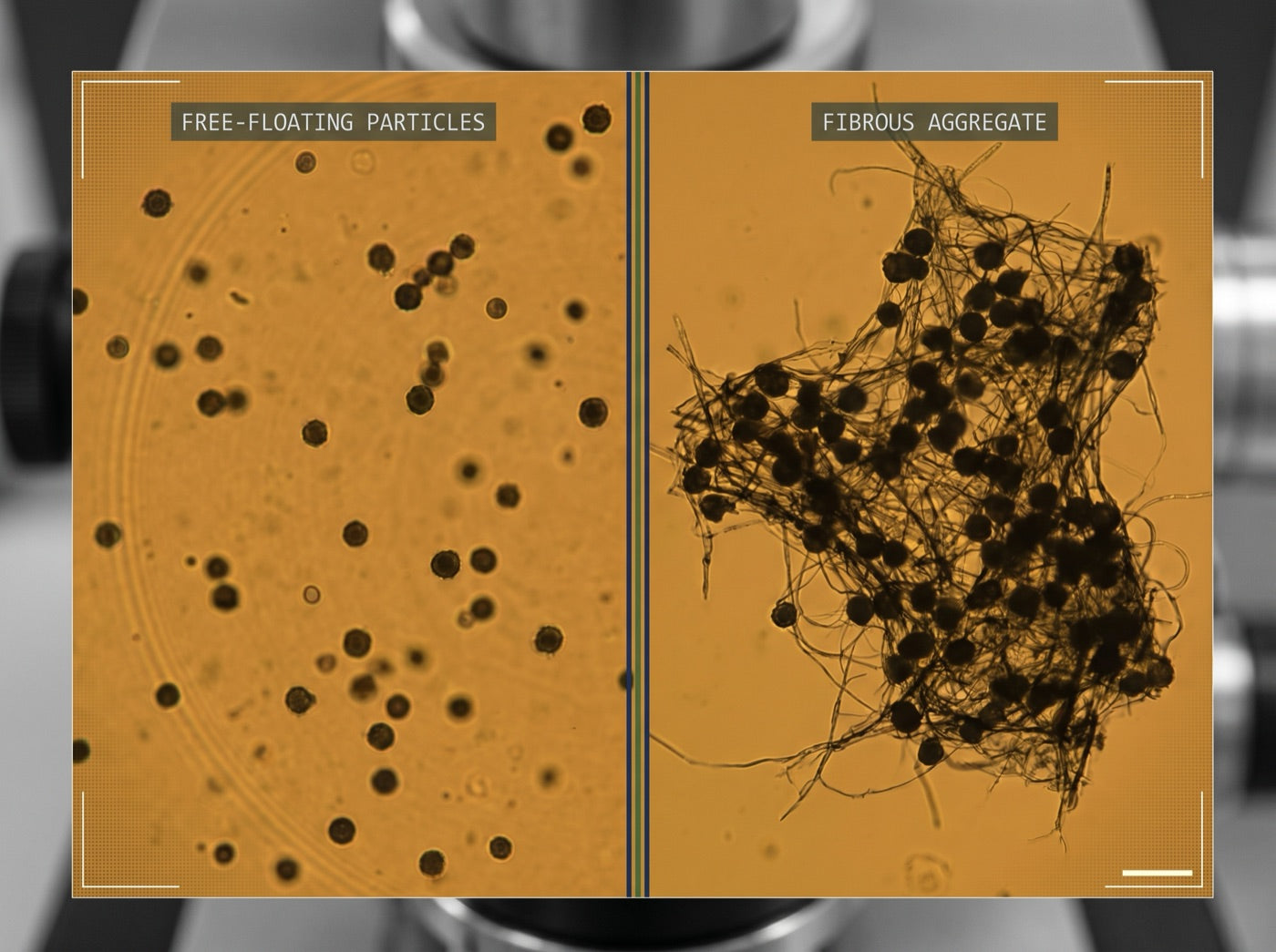
Without binding fiber, microplastic particles disperse and stay free to move through the gut.
With chitosan fiber, the same particles are drawn together into an aggregate for easier natural clearance.
Microscopy image is an illustrative representation of the binding mechanism described in ingredient-level research. It is not a depiction of in-body outcomes. *These statements have not been evaluated by the FDA. Contains shellfish (chitosan is shellfish-derived).
Microplastics have been detected across the whole body — so support starts where most of them enter: the gut. By binding particles before they're absorbed, Microplastic Detox is designed to support the systems that exposure touches.*
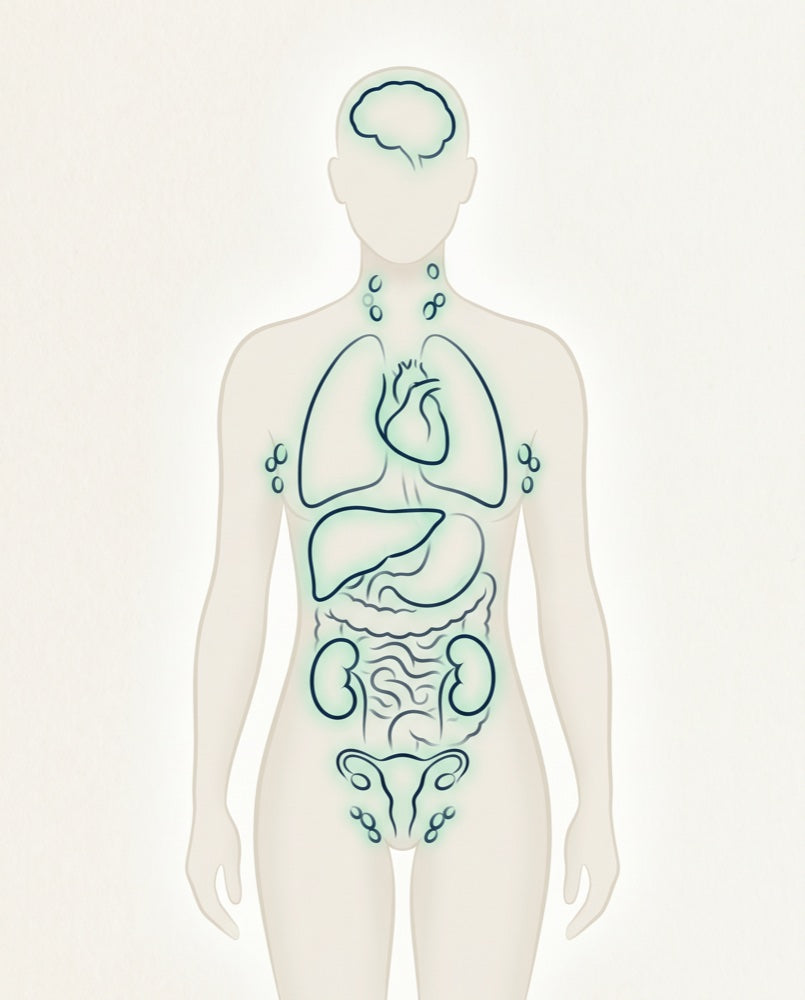
Where particles have shown the highest detected concentrations.
Plaque-associated particles studied for cardiovascular risk.
Fibers found deep in lung tissue.
A primary filtering organ for circulating particles.
The main entry point — and where binding happens.
Filtration tissue where particles have been measured.
Particles detected in semen and placental tissue.
Linked to inflammatory signaling in lab studies.
Your body's outermost line of contact.
Microplastics have been detected in these systems in published research. Support is provided through gut-level binding of particles before absorption; this is not a claim to treat or protect any specific organ. *These statements have not been evaluated by the FDA. This product is not intended to diagnose, treat, cure, or prevent any disease.
A focused blend of clinically studied dietary fibers and gut-supportive botanicals, selected for their physical properties within the digestive tract.

A positively charged dietary fiber studied for its electrostatic interaction with particles in the gut.*

A prebiotic fiber included to support a balanced microbiome environment during daily use.*

A mucilaginous fiber that supports the gut barrier and digestive comfort during daily use.*

A soluble fiber associated with gut motility and normal elimination pathways.*
A focused comparison across the dimensions that matter for daily use.
| Microplastic Detox | Activated charcoal | Food swaps alone | |
|---|---|---|---|
| Mechanism & human evidence | Electrostatic binding of microplastics. In human studies, chitosan was linked to 26.3% lower blood microplastic levels and over 45% more particles cleared in stool.* | Non-selective binding (also binds nutrients and medications). No human evidence for reducing microplastics in blood or increasing their excretion. | No binding mechanism and no evidence for clearing microplastics already in the body. |
| Daily-use suitability | Formulated for daily use. | Generally not recommended for daily use. | Depends on diet alone. |
| Ingredient studies | Chitosan: human + preclinical.* | Limited microplastic-specific data. | — |
| Broader gut support | Prebiotic fibers included.* | No prebiotic support. | Varies. |
Every batch is sent to an independent lab and screened for potency, purity, heavy metals, and microbial contamination before it ships.
Test results shown are placeholders pending the verified Certificate of Analysis. Replace with real lab data before publishing. *These statements have not been evaluated by the FDA.
These are placeholder slots. Add verified, consenting practitioners with documented credentials before publishing — do not invent endorsements.
[placeholder] Verified practitioner quote about gut-level binding and everyday microplastic exposure.
[placeholder] Verified practitioner quote about the ingredient-level research behind chitosan.
[placeholder] Verified practitioner quote about who this kind of daily support may suit.
Placeholder content. Practitioner quotes and credentials must be real, verified, and provided with consent before this section is published. Practitioner perspectives do not constitute medical advice. *These statements have not been evaluated by the FDA.

Every claim on this site is reviewed against current evidence in microplastic exposure and gut-barrier science. Where the research is about an individual ingredient, we say so.
Two capsules a day, taken with water. Here's how a simple daily routine builds over your first month.
Take 2 capsules daily with water (you can start with 1 as your body adjusts). The fiber goes to work in the gut from day one.
Pair it with a daily anchor — morning coffee or breakfast — so it becomes automatic. Keep hydration up.
Use the free Detox Playbook to swap out the biggest plastic sources in your kitchen and water.
Your routine is locked in. Your subscription keeps the next supply arriving so you never run out.
This describes the recommended routine, not promised physiological results. Individual experience varies. *These statements have not been evaluated by the FDA. This product is not intended to diagnose, treat, cure, or prevent any disease.
These are placeholder slots. Connect a review app or add verified customer reviews here before scaling — do not fabricate reviews, names, or ratings.
[placeholder] "I finally feel like I'm doing something about it." — replace with a verified review.
[placeholder] "I feel better knowing my family is protected." — replace with a verified review.
[placeholder] "The science behind it is what sold me." — replace with a verified review.
Placeholder content. All reviews, names, and ratings must be real and verified before this section is published. Individual experiences vary and are not typical results. *These statements have not been evaluated by the FDA.
Made in a cGMP-certified, FDA-inspected facility, rigorously third-party tested for purity and safety, and crafted with the highest quality ingredients.
Microplastic Detox is a daily supplement formulated to support the body's natural processes for managing microplastics in the digestive tract.* Its carefully selected ingredients, including dietary fibers, interact with particles during digestion to support normal elimination and digestive wellness.*
Microplastic Detox is formulated with ingredients that interact with microplastics during digestion, supporting their excretion through normal bowel movements. Its formulation is intentionally focused on the digestive tract, where everyday exposures pass through the body. This gut-based approach complements the body's existing elimination pathways and is designed for consistent, daily use.*
Yes. Microplastic Detox is formulated for daily use by most healthy adults when taken as directed on the label. It works locally in the digestive system, does not accumulate in the body, and is designed to support consistent digestive elimination.* Every ingredient is Generally Recognized as Safe (GRAS) for human use as designated by the FDA.
Always follow the recommended serving size. Taking more than directed does not provide additional benefit and may increase the chance of digestive discomfort.
Microplastic Detox can be a valuable supplement for anyone exposed to food, water, and air — so practically everybody. However, Microplastic Detox should not be used by individuals with shellfish or seafood allergies, or by those who are pregnant, breastfeeding, or under 18.
No. Microplastic Detox does not contain plastic or microplastics. The capsules and ingredients are carefully selected to avoid plastic content, and the product is designed with a strong emphasis on minimizing unnecessary plastic exposure wherever possible.
Two capsules a day. Free refillable jar, eBook, insured shipping, and community included. 60-day money-back guarantee. Cancel anytime.